The Village Grape Festivals of Cyprus
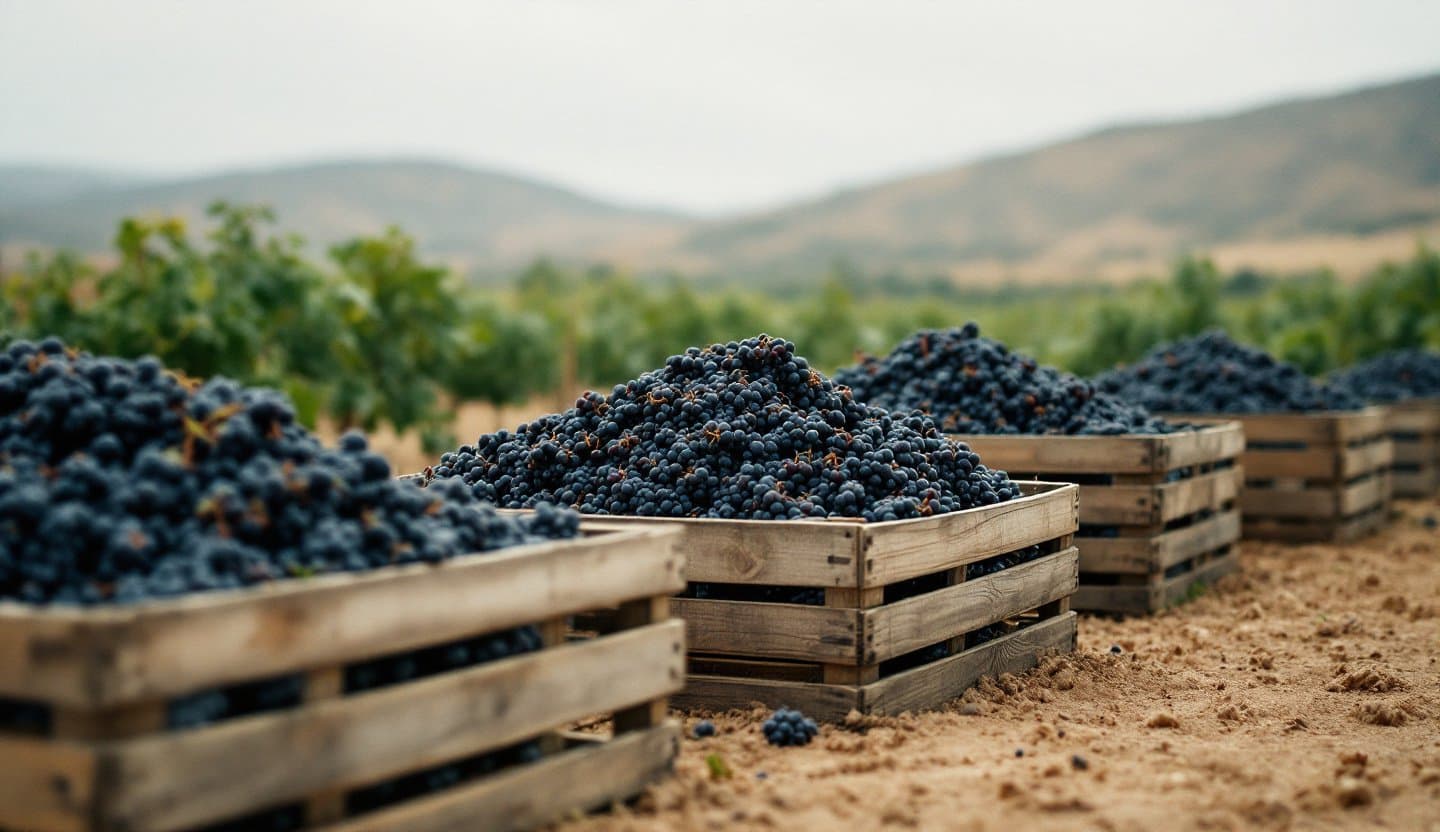
The Cyprus Wine Festival in Limassol is the big one, but it is not the only way the island marks the harvest. Through the autumn, one village after another holds a festival of its own in the square. They are smaller and more local, and they are built less around wine than around what the village makes from fresh grape must: palouzes, soutzoukos and kiofterka. For a visitor they are the closest thing to seeing the harvest the way the villages still keep it.
What happens at a village grape festival
Most are organised by the village's own community council, usually on a Sunday, in the square or beside the church. The Deputy Ministry of Tourism lists them in its calendar of traditional festivals, but each one is run by its village, and no two are quite alike.
The centre of the day is the cauldron. Fresh must is boiled and thickened into palouzes, and visitors can usually watch, and often help, as strings of almonds and walnuts are dipped into it to make soutzoukos. Around that there is music and dancing, stalls selling the village's own produce, and wine and zivania from local producers. Some villages add grape treading or a demonstration of the old copper still.
Palouzes, soutzoukos and kiofterka
Palouzes, also written ppalouzes, is fresh grape must boiled and thickened with flour into a soft, glossy pudding. Villages flavour it differently, with rose geranium leaves, flower water, cinnamon or mastic, and it is eaten warm from the pot or cold once it has set.
Soutzoukos is made from it. Almonds or walnuts are threaded onto long strings, dipped in the hot palouzes, left to cool and dipped again, layer on layer, until the coating is thick, and the strings are then hung to dry for several days. It is the sweet you see hanging in the shops of wine villages such as Omodos.
Kiofterka is made from the palouzes that was not eaten: it is poured into flat trays, left to set, cut into pieces and dried in the shade until it turns chewy. With a few almonds it is a traditional companion to a glass of wine.
Pachna has its own version. Its zymotos palouzes starts by kneading the flour into the must rather than stirring it in, and the method is recorded by the Cyprus National Commission for UNESCO in the island's inventory of intangible cultural heritage.
Where and when
The season runs from late August into November, with most festivals in September and October, the weeks of the harvest itself. Almost all of them are in the wine villages in the hills of Limassol and Paphos, with a few higher up in Pitsilia and the Marathasa valley.
The same villages tend to hold them year after year. In September they include Agios Amvrosios, Dora, Mallia, Vouni, Vasa Koilaniou, where the festival takes place in the courtyard of the zivania museum, Arsos, Lofou and Salamiou. In October come Pachna, Agios Mamas, Pretori, Arminou, Agios Georgios Silikou, Polystypos and Pera Pedi, whose festival is held at the village's viticulture museum. Kalo Chorio, one of the Commandaria villages north of Limassol, holds a Commandaria festival in October, and Agios Dimitrios in the Marathasa valley holds a festival of the veriko grape. Koilani holds its Afamia in October, a festival now more than forty years old.
Zivania has festivals of its own in the same weeks, when the copper stills are fired to distil what is left after pressing: in Alona and Pelendri, and in Arsos, where the distilling season itself, the kazaniasmata, is the occasion.
Dates move from year to year and are often confirmed late. The Deputy Ministry of Tourism publishes them on Visit Cyprus and on its Heartland of Legends site, and asks visitors to check with the organisers before setting out.
Dates in 2026
These are the festivals still to come this year, as listed by the Deputy Ministry of Tourism at the end of September.
Thursday 1 October: Pachna. Sunday 4 October: Agios Mamas and Pretori. Sunday 11 October: Arminou, Agios Georgios Silikou and Polystypos. Saturday 17 and Sunday 18 October: the Commandaria festival in Kalo Chorio. Sunday 18 October: Pera Pedi. Sunday 25 October: Agios Dimitrios, the kazaniasmata in Arsos and the zivania festival in Alona.
Still without a date: the Afamia in Koilani and the zivania festival in Pelendri, both expected in October, and a grape festival in Platanistasa in November.
Wineries in the festival villages
Several festival villages have wineries of their own, which makes it easy to pair a festival with a visit. Pachna has two, Monolithos and Yiaskouris. Pretori has Nelion, Agios Mamas has Revecca, Arsos has Nikolettino and Pera Pedi has Constantinou. Pelendri is home to Tsiakkas, and Koilani to Vlassides and Ayia Mavri among others. In the Commandaria villages around Kalo Chorio, the producers include Karseras in Doros and the Ayios Konstantinos Commandaria Winery.
On a festival day the village is busy, and the winemaker may well be at the festival rather than the cellar door. Contact a winery before you go, as you would on any other day.
Practical notes
Start times range from late morning to early evening, and most festivals run for several hours, so there is no need to be there at the start. The hill villages are noticeably cooler than the coast once the sun goes down, even in early October.
The roads up are narrow and winding, and parking in a small village fills quickly on a festival day. If you mean to taste the wine and the zivania, go with a designated driver or a taxi, the same rule as for any winery visit.
Soutzoukos is made in these weeks, and a festival is the best place to buy it fresh.
Related wineries
Contact details and locations for each are on their page.
Monolithos Boutique Winery
Limassol
Yiaskouris Winery
Limassol
Nelion Winery
Paphos

Revecca Traditional Winery
Limassol
Nikolettino Winery
Limassol
Constantinou Winery
Limassol
Tsiakkas Winery
Limassol

Vlassides Winery
Limassol
Ayia Mavri Winery
Limassol
Karseras Commandaria Winery
Limassol
Ayios Konstantinos Commandaria Winery
Limassol
More guides
The Krasochoria: Limassol's Wine Villages
The dense cluster of wine villages on the southern Troodos slopes holds more wineries than anywhere else in Cyprus. Here's how the region fits together.
Wine stylesCommandaria: The World's Oldest Named Wine
Still made in fourteen designated villages from sun-dried Mavro and Xynisteri, Commandaria has a documented history stretching back to the Crusades.
GrapesThe Indigenous Grapes of Cyprus
Xynisteri, Mavro, Maratheftiko and a handful of rare varieties being brought back from near-extinction — a guide to what actually grows on the island.