Reading a Cyprus Wine Label
Cyprus adopted the EU's two-tier appellation system when it joined in 2004. The words that result — PDO, PGI, a village name, a district name — are not decoration. Each one commits the producer to a specific set of limits, and knowing which limits tells you a surprising amount about what is in the bottle.
Two tiers
A Protected Designation of Origin, PDO, is the stricter tier: a defined area, defined varieties, and rules on how the vineyard is worked. A Protected Geographical Indication, PGI, is broader — a district rather than a hillside, with looser limits.
Both are overseen by the Cyprus Wine Products Council. Neither is a quality judgement in itself, which is the most common misreading: a PGI wine is not a lesser wine, it is a wine whose maker chose not to be bound by a PDO's rules, often because the blend they wanted sits outside them.
The seven PDOs
Commandaria, Krasochoria Lemesou, Krasochoria Lemesou–Afames, Krasochoria Lemesou–Laona, Laona–Akama, Vouni Panayia–Ampelitis and Pitsilia. Three of the seven sit under the Krasochoria Lemesou umbrella: the main zone plus Afames and Laona as sub-appellations, which is why those names appear both alone and hyphenated.
The rules bite. Vines must be at least five years old. Yields are capped between roughly 36 and 45 hectolitres per hectare depending on the variety — low, by any standard. Minimum alcohol is 12% for reds and 11% for whites. And each PDO carries elevation criteria, with the bands running between about 400 and 1,400 metres.
The four PGIs
Lefkosia, Lemesos, Larnaka and Pafos — the four districts, using their Greek names. At least 85% of the grapes must come from the named district, vines must be at least four years old, and yields are allowed to run higher, between roughly 55 and 70 hectolitres per hectare. Minimum alcohol drops to 11% for reds and 10% for whites.
That 85% rule is worth holding on to. It means a PGI bottle can legally contain up to 15% of fruit from elsewhere on the island, which is how many producers build a consistent blend across vintages.
The rule that tells you the most
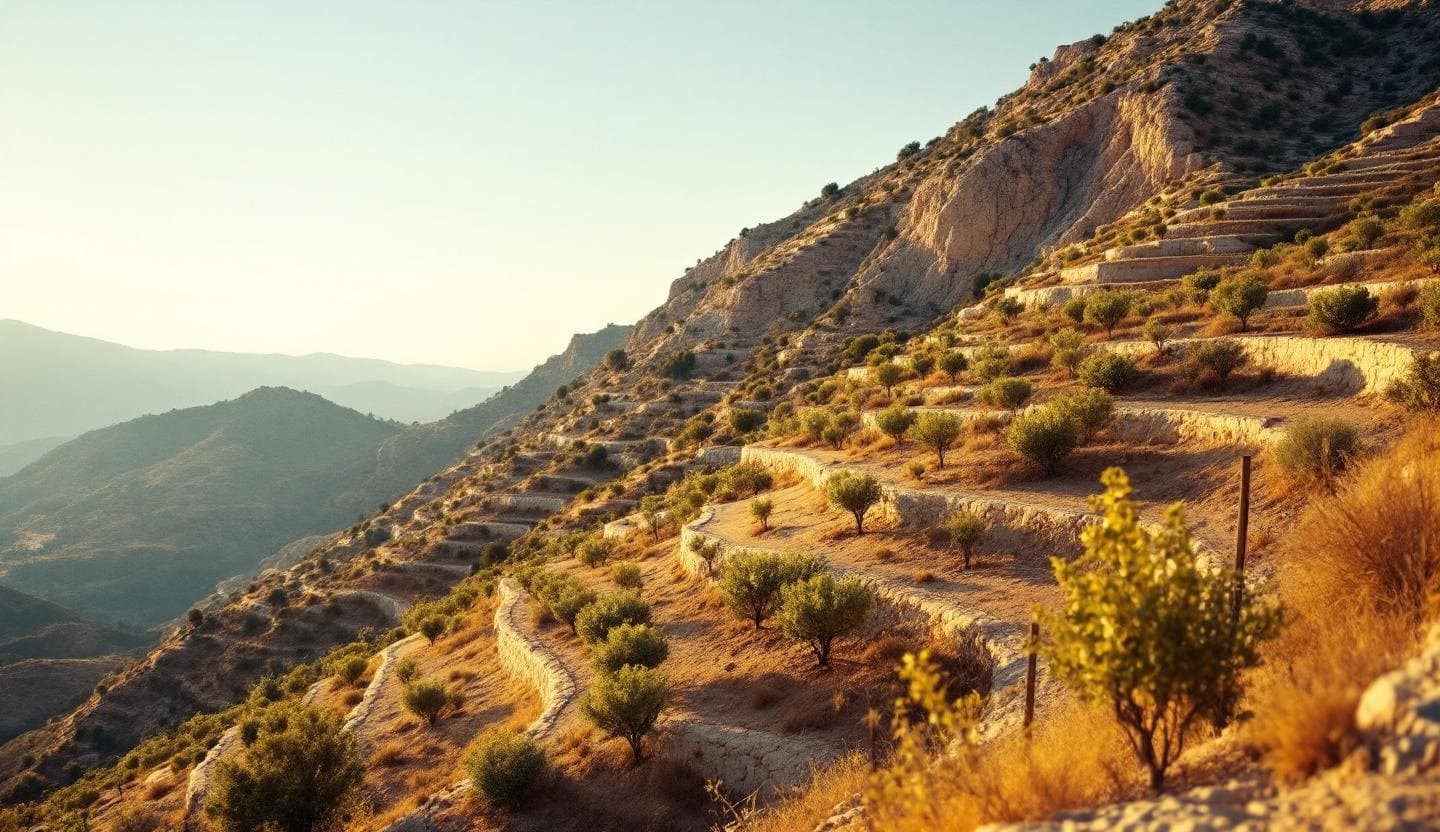
The elevation criteria are the unusual part, and they are the clearest signal on the label. Very few wine countries write altitude into appellation law. Cyprus does it because altitude is the island's entire answer to being hot and southern: height buys the cool nights that keep acidity in the grape.
So a PDO name on a Cypriot bottle is, among other things, a statement about how high the vineyard sits. Pitsilia on a label means mountain fruit in a way that no tasting note needs to tell you.
Related wineries
Contact details and locations for each are on their page.
More guides
The Krasochoria: Limassol's Wine Villages
The dense cluster of wine villages on the southern Troodos slopes holds more wineries than anywhere else in Cyprus. Here's how the region fits together.
Wine stylesCommandaria: The World's Oldest Named Wine
Still made in fourteen designated villages from sun-dried Mavro and Xynisteri, Commandaria has a documented history stretching back to the Crusades.
GrapesThe Indigenous Grapes of Cyprus
Xynisteri, Mavro, Maratheftiko and a handful of rare varieties being brought back from near-extinction — a guide to what actually grows on the island.